
Think before you travel
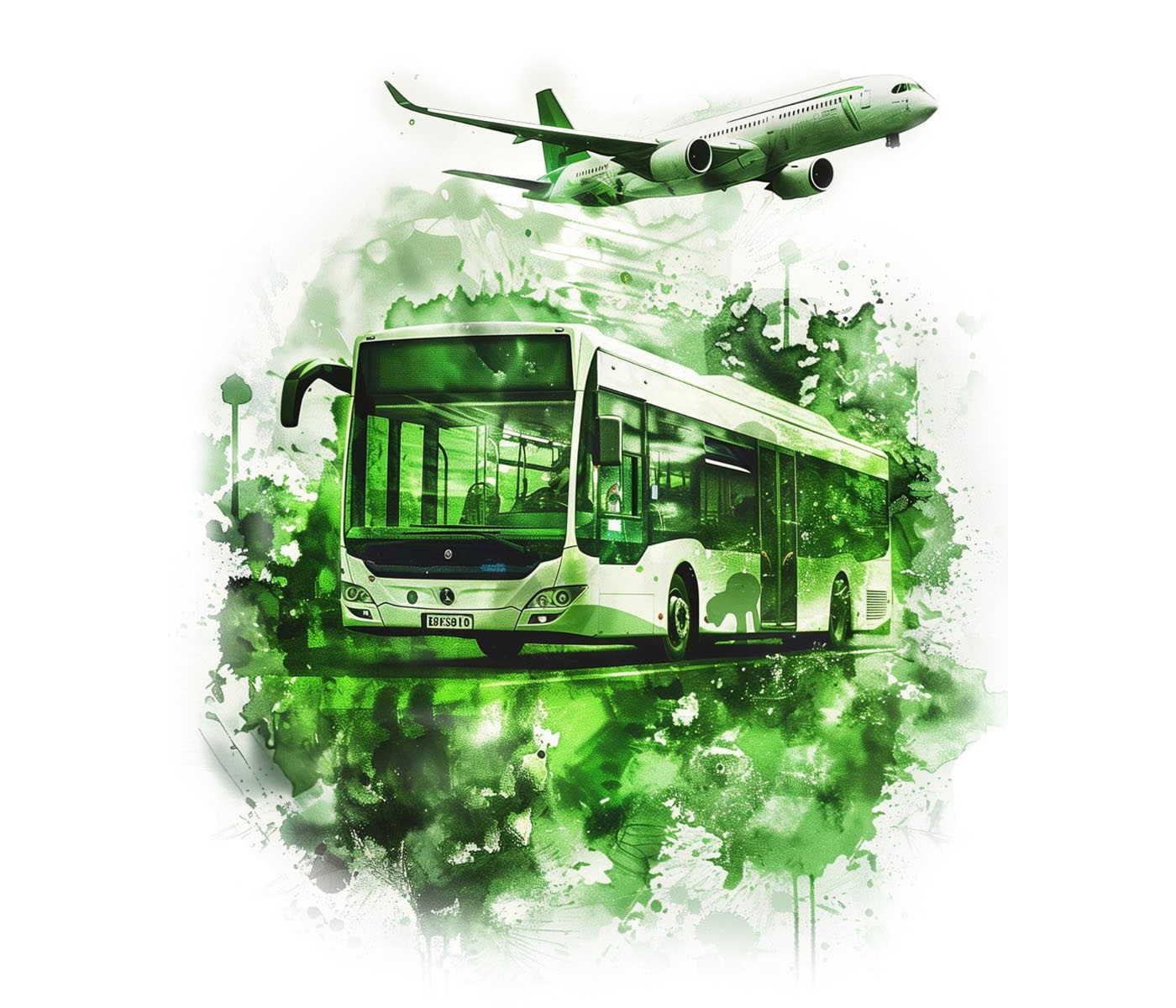
Road transport accounts for 11.9% of global CO2 emissions annually, with 60% from passenger vehicles (cars, motorcycles, buses) and 40% from road freight (lorries, trucks). Despite its smaller share, air travel and freight is responsible for 0.6 billion tons of CO2 , accounting for 2% of global emissions each year.
Transport in Ireland is the largest source of CO2 emissions, making up 40% of the country’s emissions in 2022. It is the area with the most significant growth in emissions since 2012. Transport-related air pollution has halved since 1990 due to advancements in technology and stricter vehicle emissions controls. However, the increasing number of vehicles continues to raise concerns over carbon monoxide, nitrogen oxide, and particulate emissions.
To address these issues, Ireland has ambitious plans:
- A target of 936,000 electric vehicles by 2030
- The introduction of hybrid public buses in urban areas since 2019
- The development of over 200km of new cycling infrastructure


The cultural & creative industries can mitigate the negative environmental impacts of Travel & Transport by following the 10-step checklist (click to open):
| 1. | Meet online to avoid unnecessary journeys. |
| 2. | Work with local suppliers. Wherever possible find local contractors to support the local economy and reduce emissions. |
| 3. | Choose EV or Hybrid when booking ground transport/taxis. |
| 4. | Promote sustainable travel g. website information and social media posts about carsharing/carpooling, accessing a venue via active travel or public transport methods. |
| 5. | Prioritise sustainable travel. In both internal and external communications, place emphasis on the available sustainable travel options (walking, cycling, public transport) before driving options. |
| 6. | Create a sustainable travel policy. Aim to record all business/organisational travel throughout the year, using the headings: mode of transport and distance travelled. |
| 7. | Reduce number of trips. Aim to reduce production and infrastructure journeys. This can be done by paying particular attention to deliveries schedules during the planning phase. |
| 8. | Ask artists to consider emissions. In communications with artists encourage them to consider the emissions associated with their travel plans. |
| 9. | Consider partnering with an EV or carshare company. Explore opportunities for partnerships with Electric Vehicle (EV) or Carshare companies, which could include promotional opportunities and discounted rates for you or your staff switching to EV. |
| 10. | Provide clear travel information on your website. A map of the surrounding area with the nearest rail stations, bus stops, and other local transport links clearly marked. Include links to bus timetables, or a map of near-by electric car charging points. Provide maps of safe cycle routes on the website and provide secure cycle storage at your event or venue. |

