Transparency, accountability and reducing inequalities
Global systemic inequality significantly contributes to climate change and environmental degradation, with countries that are part of the Global North benefiting from gross resource extraction, exploitation, and waste generation of countries that are part of the Global South. These nations, Ireland included, not only secure a trade surplus with the highest value added but also import nearly all resources, creating a cycle of overconsumption and excess.
Ireland has a critical role in adopting ethical and well-researched governance practices across all sectors, emphasising the need for transparent operations.
The EU is currently in the process of mandating reporting on sustainability, via the Corporate Sustainability Reporting Directive (CSRD). A set of reporting standards was published in early 2023. This legislation applies to large companies at first, i.e. those with more than 250 employees. Although SMEs are not required to report for a number of years, it is vital that we put best practice processes and policies in place now in anticipation of the CSRD. SMEs who align earlier to sustainability reporting standards will be at an advantage, with greater access to finance, meeting supply chain requirements and talent attraction and retention.
The cultural and creative industries are pivotal in steering society towards a just, equitable, and low-carbon future. The sectors emphasis on multi-stakeholder engagement offers a prime opportunity to elevate awareness, embed environmental values, and initiate collaborative climate action, making it an integral player in fostering a sustainable global community.
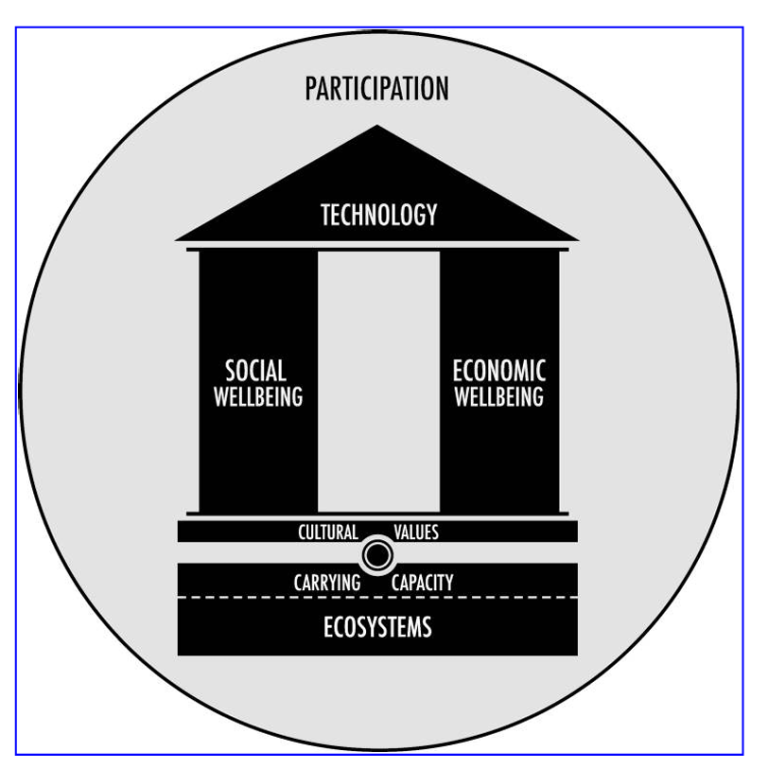
As seen in the Sustainabuild framework (Luthe & Kutzschenbach, 2016) below, a solid and healthy ecological foundation is needed to build our cultural, social, economic, and technological systems on top of. The balance between social and economic values is governed by a societies cultural values. When these cultural values are in balance with the ecosystems a society is based in, then both people and planet prosper and thrive together.
This framework highlights the core role that culture change plays in re-balancing the system we live in to ensure the carrying capacity of the earth is respected and replenished – the cultural and creative industries are in the best position to lead this bottom-up culture change movement.
To start to apply good governance practices, either as an individual or with your team, try applying a prioritisation matrix to the potential sustainability gains. A basic example is shown below and can be used to frame your thinking in any of the impact areas. For example, an easy and impactful action could be to replace light fittings with LEDs in an older building, this would become a priority.